
◆ Cố vấn công bố
Tạp chí săn mồi là gì? Cách tránh khi công bố bài Scopus
Muốn tránh tạp chí săn mồi khi công bố bài Scopus, bạn cần tự kiểm chứng tạp chí qua các cơ sở dữ liệu độc lập như DOAJ, Cổng ISSN và danh sách nguồn chính thức của Scopus, thay vì tin vào những gì trang web của tạp chí tự giới thiệu. Bài này chỉ ra những dấu hiệu cảnh báo rõ nhất, hướng dẫn dùng bảng kiểm Think. Check. Submit., cách kiểm chứng một tạp chí trước khi nộp, và cách xử lý nếu bạn đã lỡ nộp bài vào một tạp chí như vậy.
Tạp chí săn mồi (predatory journal) thu tiền của bạn, bỏ qua vòng phản biện thật và có thể giữ luôn bài của bạn ở đó, và với nhà nghiên cứu Việt Nam thì nó đủ sức làm hỏng cả một chặng đường sự nghiệp. Thoạt nhìn, loại tạp chí này rất giống tạp chí chính danh, với logo chuyên nghiệp, một thứ gọi là "impact factor" và thư báo nhận bài ngay trong tuần. Thực chất, chúng khai thác mô hình truy cập mở để kiếm lời mà không mang lại chút chất lượng biên tập nào như một tạp chí Scopus Q1 hay Q2 thật sự. Tránh chúng là kỹ năng bạn học được trước khi bấm nút nộp bài, và bài này xoay quanh bảy câu hỏi mà nghiên cứu sinh Việt Nam hay hỏi cố vấn công bố của MAAS nhất. Nếu bạn còn phân vân nên công bố ở đâu trước, bài nên công bố hội thảo hay tạp chí trước đặt hai lựa chọn cạnh nhau.

◆ Câu hỏi 1 / 7 · Nó là gì
Tạp chí săn mồi (predatory journal) chính xác là gì?
Trả lời trực tiếp: Tạp chí săn mồi là tạp chí đặt lợi nhuận của mình lên trên học thuật. Nó thu phí công bố nhưng không tổ chức phản biện thật, không giám sát biên tập và không lưu trữ bài lâu dài. Vẻ ngoài của nó bắt chước tạp chí chính danh, còn các khâu kiểm soát chất lượng, vốn làm cho công bố có ý nghĩa, thì bị bỏ qua.
Năm 2019, một nhóm quốc tế gồm 43 chuyên gia họp tại Ottawa đã thống nhất một định nghĩa chung và đăng trên Nature. Grudniewicz và cộng sự (2019) viết rằng tạp chí săn mồi "prioritize self-interest at the expense of scholarship and are characterized by false or misleading information, deviation from best editorial and publication practices, a lack of transparency, and/or the use of aggressive and indiscriminate solicitation practices" (tr. 211). Nói cách khác, chúng đặt lợi ích riêng lên trên học thuật và mang những đặc điểm như thông tin sai hoặc gây hiểu nhầm, đi chệch khỏi thông lệ biên tập và xuất bản tốt, thiếu minh bạch, hoặc chào mời bài vở hung hăng và bừa bãi. Committee on Publication Ethics (2019), tức Uỷ ban về Đạo đức Xuất bản (COPE), mô tả cùng khuôn mẫu ấy ở những tạp chí không có phản biện nghiêm túc và lợi dụng truy cập mở để thu lợi tài chính.
Một học viên vừa tốt nghiệp thạc sĩ ở Việt Nam từng mang tới cho cố vấn MAAS một lá thư báo "chấp nhận bài" đến sau bốn ngày kể từ lúc nộp, kèm yêu cầu đóng 600 đô la Mỹ. Cố vấn chỉ cho chị thấy rằng một vòng phản biện thật gần như không bao giờ xong trong vài ngày, và tạp chí đó không có tên trong bất kỳ danh mục chỉ mục nào được công nhận. Chị rút bài trước khi trả tiền rồi chuyển bài sang một tạp chí Q2 được lập chỉ mục đàng hoàng.
◆ Câu hỏi 2 / 7 · Rủi ro với tác giả Việt Nam
Vì sao tạp chí săn mồi đặc biệt nguy hiểm với nhà nghiên cứu Việt Nam?
Trả lời trực tiếp: Nhà nghiên cứu Việt Nam chịu rủi ro cao hơn vì công bố gắn với mốc tốt nghiệp, mốc phong hàm và mốc cấp kinh phí, nên áp lực phải có bài nhanh rất lớn. Tạp chí săn mồi nhắm đúng vào sự vội vã ấy, và bài đăng ở đó có thể không được tính cho tấm bằng hay cho một yêu cầu mà Bộ công nhận, khiến bạn mất cả tiền lẫn kết quả.
Shen và Shah (2023) cho thấy các nhà xuất bản săn mồi cố ý nhắm vào những nhà nghiên cứu đang chịu áp lực "publish or perish", tức công bố hoặc bị đào thải, trong đó có người đang chạy hạn tốt nghiệp, phong hàm hay xin kinh phí, bằng cách hứa hẹn công bố nhanh và chắc chắn được đăng. Theo Elsevier (n.d.), bản thân Scopus cũng vận hành một quy trình giám sát liên tục qua Content Selection and Advisory Board (CSAB), tức hội đồng tuyển chọn và tư vấn nội dung của Scopus, và loại khỏi danh mục những tạp chí vi phạm chuẩn. Vì vậy một tạp chí đang "có chỉ mục" lúc bạn nộp vẫn có thể bị gỡ sau đó. Ở Việt Nam, hội đồng chức danh giáo sư và Quỹ Phát triển Khoa học và Công nghệ Quốc gia (NAFOSTED) đều đặt điều kiện công bố trên tạp chí có chỉ mục Scopus hoặc Web of Science, nên một bài đăng ở tạp chí săn mồi có thể bị hội đồng loại thẳng dù bạn đã trả tiền và có bài in ra. NAFOSTED cũng có chương trình hỗ trợ nghiên cứu sau tiến sĩ trong nước, và điều kiện của chương trình ấy nằm ở bài học bổng sau tiến sĩ VinIF và NAFOSTED.
Một nghiên cứu sinh ở Thành phố Hồ Chí Minh cần một bài thuộc chỉ mục Scopus để đáp ứng yêu cầu của chương trình. Chị đã trả tiền để đăng trên một tạp chí mà vài tháng sau bị lặng lẽ gỡ khỏi Scopus, nên bài báo không còn đáp ứng yêu cầu nữa. Làm việc cùng một cố vấn của dịch vụ Cố vấn Công bố của MAAS, chị dựng lại nghiên cứu cho một tạp chí Q2 ổn định và kiểm tra tình trạng chỉ mục của tạp chí trước khi nộp lại.
◆ Câu hỏi 3 / 7 · Dấu hiệu cảnh báo
Dấu hiệu rõ nhất của một tạp chí săn mồi là gì?
Trả lời trực tiếp: Những dấu hiệu mạnh nhất gồm lời hứa phản biện nhanh tới mức phi thực tế, mức phí bị giấu hoặc chỉ lộ ra sau khi nhận bài, chỉ số giả hoặc không kiểm chứng được, trang web cẩu thả đầy lỗi chính tả, và thư mời tự tìm tới, khen bạn rồi hứa chắc chắn sẽ đăng bài. Một dấu hiệu chưa phải bằng chứng, nhưng nhiều dấu hiệu cùng lúc là lời cảnh báo rõ.
Tạp chí chính danh và tạp chí săn mồi, từng dấu hiệu một
Mỗi dòng đặt điều một tạp chí chính danh cho thấy cạnh điều một tạp chí săn mồi cho thấy ở cùng một dấu hiệu.
Tạp chí chính danh
Tạp chí săn mồi
Thời gian phản biện: thường từ 2 tới 4 tháng trở lên.
Thời gian phản biện: "chấp nhận bài" sau vài ngày, có khi vài giờ.
Phí: nêu rõ từ đầu, có đơn vị tiền tệ và nói rõ phí trả cho việc gì.
Phí: bị giấu, hoặc chỉ lộ ra sau khi nhận bài.
Chỉ số: có thật, kiểm chứng được, như Scopus CiteScore hay Clarivate JIF.
Chỉ số: tên tự chế như "Global Impact Factor".
Liên hệ: có tên tổng biên tập, địa chỉ và số điện thoại kiểm chứng được.
Liên hệ: email chung chung, không có địa chỉ thật.
Chào mời bài: hiếm, người chọn tạp chí là bạn.
Chào mời bài: thư khen ngợi tự tìm tới, hứa đăng nhanh.
Chỉ mục: có tên trong DOAJ, Scopus hoặc Web of Science.
Chỉ mục: tự nhận có chỉ mục nhưng tra không thấy.
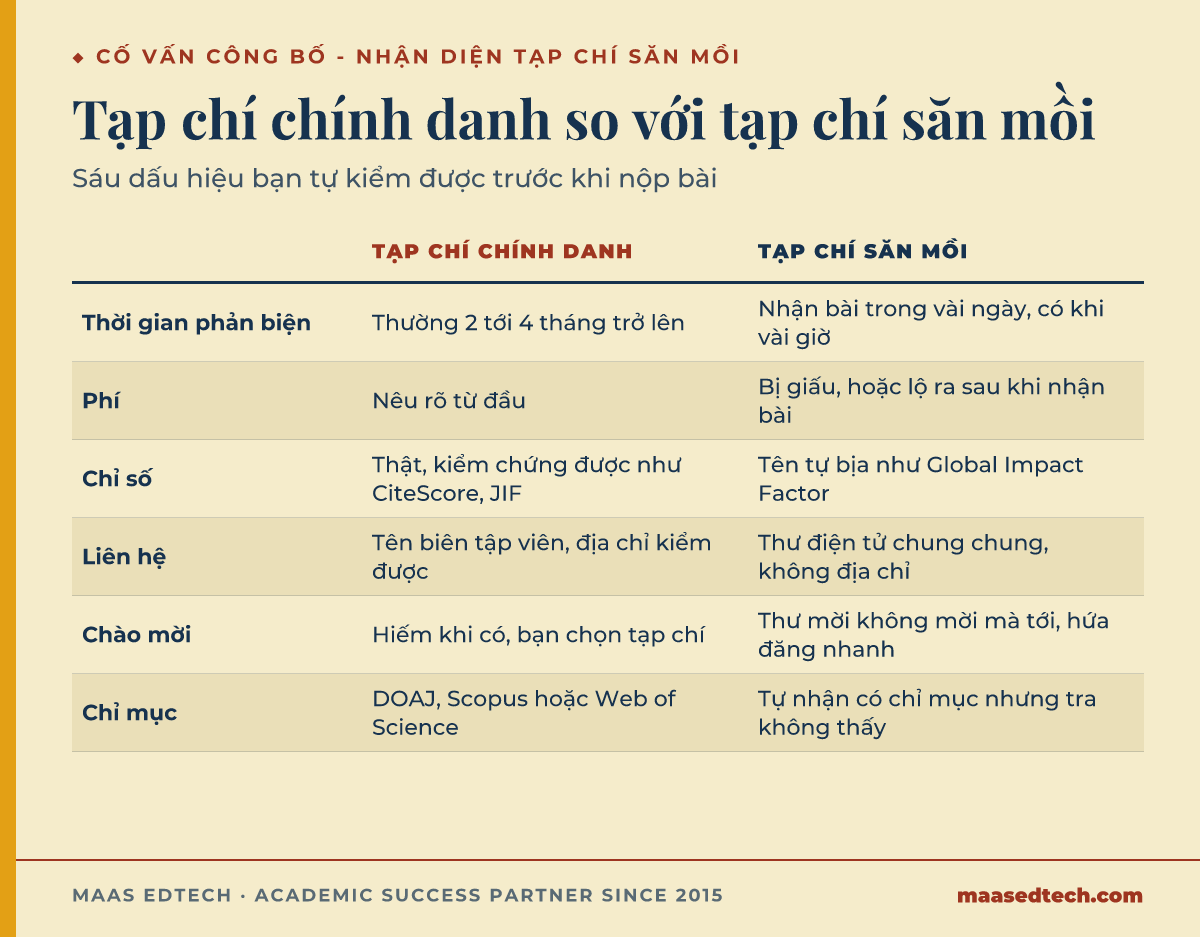
Committee on Publication Ethics (2019) và Think. Check. Submit. (n.d.), cùng các hướng dẫn liêm chính nghiên cứu của nhiều trường đại học, đều chỉ ra những dấu hiệu giống nhau. Dấu hiệu đầu tiên là thời gian phản biện, thường mất ít nhất ba tháng ở tạp chí chính danh nhưng chỉ vài ngày ở tạp chí săn mồi. Tiếp theo là những chỉ số ảnh hưởng gây hiểu nhầm hoặc bịa ra, và cuối cùng là cách chào mời bài hung hăng. Bảng dưới đây tóm tắt cách một tạp chí đáng tin khác một tạp chí săn mồi ở những dấu hiệu bạn tự kiểm được.
| Dấu hiệu | Tạp chí chính danh | Tạp chí săn mồi |
|---|---|---|
| Thời gian phản biện | Thường từ 2–4 tháng trở lên | "Chấp nhận bài" sau vài ngày, có khi vài giờ |
| Phí | Nêu rõ từ đầu, có đơn vị tiền tệ và nói rõ phí trả cho việc gì | Bị giấu, hoặc chỉ lộ ra sau khi nhận bài |
| Chỉ số | Có thật, kiểm chứng được (Scopus CiteScore, Clarivate JIF) | Tên tự chế như "Global Impact Factor" |
| Liên hệ | Có tên tổng biên tập, địa chỉ và số điện thoại kiểm chứng được | Email chung chung, không có địa chỉ thật |
| Chào mời bài | Hiếm, người chọn tạp chí là bạn | Thư khen ngợi tự tìm tới, hứa đăng nhanh |
| Chỉ mục | Có tên trong DOAJ, Scopus hoặc Web of Science | Tự nhận có chỉ mục nhưng tra không thấy |
Một giảng viên được MAAS đồng hành từng chuyển cho cố vấn một thư mời chị đăng bài trong một "số đặc biệt" và hẹn xuất bản trong vòng hai tuần. Cố vấn cùng chị đối chiếu bảng trên từng dòng một. Tạp chí đó ghi một thứ gọi là "Universal Impact Factor" vốn không tồn tại, không có địa chỉ bưu chính và không có tên trong DOAJ, nên chị xoá thư mời.
◆ Câu hỏi 4 / 7 · Think. Check. Submit.
Bảng kiểm Think. Check. Submit. hoạt động ra sao?
Trả lời trực tiếp: Think. Check. Submit. là sáng kiến miễn phí do nhiều bên trong ngành xuất bản cùng xây dựng, cho nhà nghiên cứu một bảng kiểm có cấu trúc để đánh giá một tạp chí có đáng gửi công trình hay không. Bạn trả lời một loạt câu hỏi có hoặc không về mức minh bạch, quy trình phản biện, phí và danh mục chỉ mục, rồi khuôn mẫu các câu trả lời cho bạn biết có nên đi tiếp.
Bảng kiểm tạp chí của sáng kiến này hỏi những điều như bạn hoặc đồng nghiệp có biết tạp chí này không, thông tin liên hệ của nhà xuất bản có thật không, quy trình phản biện có được mô tả rõ không, phí có minh bạch không, và tạp chí có nằm trong một danh mục được công nhận như DOAJ hay không (Think. Check. Submit., n.d.). Chính sáng kiến này viết rằng "the checklist is a tool that will help you discover what you need to know when assessing whether or not a publisher is suitable for your research", nghĩa là bảng kiểm được dựng ra để giúp bạn tự tìm ra những gì cần biết khi đánh giá một nhà xuất bản có phù hợp với nghiên cứu của mình hay không. Bảng kiểm có bản dịch sang hơn 40 ngôn ngữ, nên nhà nghiên cứu Việt Nam dùng tiếng Anh như ngôn ngữ thứ hai cũng dùng trực tiếp được.
Cố vấn MAAS đưa Think. Check. Submit. thành một bước bắt buộc ở giai đoạn bản thảo với mọi tác giả công bố lần đầu. Một nghiên cứu sinh ngành kỹ thuật người Việt nhờ vậy phát hiện tạp chí trong danh sách rút gọn của mình trượt ba mục của bảng kiểm, gồm không có tên biên tập viên, không có trong DOAJ và một khoản phí không được giải thích. Anh chuyển sang một tạp chí thay thế đã được kiểm chứng trước khi nộp.
◆ Câu hỏi 5 / 7 · Kiểm tra tạp chí
Cách kiểm tra tạp chí uy tín trước khi nộp bài như thế nào?
Trả lời trực tiếp: Hãy đối chiếu tạp chí với các cơ sở dữ liệu độc lập thay vì tin trang web của nó. Với tạp chí truy cập mở, bạn xác nhận nó có tên trong DOAJ, tra mã ISSN trên Cổng ISSN chính thức, xem nhà xuất bản có phải thành viên COPE không, và xác nhận chỉ mục trực tiếp trên Scopus hoặc Web of Science chứ không nhìn logo dán trên trang tạp chí.
Bốn phép kiểm độc lập trước khi nộp bài
Chạm vào một phép kiểm để xem nó xác nhận điều gì.
DOAJ
Với tạp chí truy cập mở, bạn xác nhận nó có tên trong Directory of Open Access Journals. DOAJ áp dụng tiêu chí thẩm định trước khi đưa một tạp chí vào danh sách, và danh sách này chứa rất ít tạp chí săn mồi.
Cổng ISSN
Tra mã ISSN trên Cổng ISSN chính thức, nơi xác nhận danh tính đăng ký của một tạp chí, nhờ đó bạn bắt được những tạp chí đặt tên bắt chước các tạp chí đã có tiếng.
Thành viên COPE
Xem nhà xuất bản có phải thành viên COPE không, vì tư cách thành viên cho thấy nhà xuất bản đã cam kết theo các chuẩn đạo đức được công nhận.
Danh sách của chỉ mục
Xác nhận chỉ mục trực tiếp trên Scopus hoặc Web of Science chứ không nhìn logo dán trên trang tạp chí, vì các trang săn mồi thường treo huy hiệu "indexed in Scopus" giả.
DOAJ là Directory of Open Access Journals, tức Thư mục Tạp chí Truy cập Mở. Theo Directory of Open Access Journals (n.d.), DOAJ áp dụng tiêu chí thẩm định trước khi đưa một tạp chí vào danh sách, và vì danh sách này chứa rất ít tạp chí săn mồi nên có tên trong đó là một tín hiệu tích cực mạnh. ISSN International Centre (n.d.) mô tả Cổng ISSN là nơi xác nhận danh tính đăng ký của một tạp chí, nhờ đó bạn bắt được những tạp chí đặt tên bắt chước các tạp chí đã có tiếng. Theo Committee on Publication Ethics (2019), tư cách thành viên COPE cho thấy nhà xuất bản đã cam kết theo các chuẩn đạo đức được công nhận. Các trang săn mồi thường treo huy hiệu "indexed in Scopus" giả, nên cách kiểm đáng tin duy nhất là tra danh sách nguồn ngay trên trang web của chính danh mục chỉ mục đó.
Một nhà nghiên cứu y tế công cộng người Việt từng thấy yên tâm nhờ dòng chữ "Scopus indexed" trên trang chủ của một tạp chí. Cố vấn MAAS tra danh sách nguồn chính thức của Scopus và thấy tạp chí đó hoàn toàn không có tên. Dòng chữ kia là bịa, và chị tránh được tạp chí ấy.
◆ Câu hỏi 6 / 7 · Thư mời và chỉ số giả
Thư mời tự tìm tới và chỉ số ảnh hưởng giả thì xử lý thế nào?
Trả lời trực tiếp: Hãy coi những thư tự tìm tới mời bạn đăng bài thật nhanh, vào ban biên tập hay góp bài cho một "số đặc biệt" là dấu hiệu cảnh báo chứ không phải cơ hội, vì tạp chí chính danh hiếm khi chạy theo tác giả. Hãy hoài nghi mọi "impact factor" không phải Journal Impact Factor của Clarivate hay CiteScore của Scopus, vì tạp chí săn mồi hay bịa ra những chỉ số nghe rất chính thức.
Grudniewicz và cộng sự (2019) đưa chào mời bài hung hăng và bừa bãi vào ngay trong định nghĩa đồng thuận về xuất bản săn mồi. Committee on Publication Ethics (2019) cùng Shen và Shah (2023) đều cảnh báo rằng tạp chí săn mồi quảng cáo những chỉ số bịa đặt, với tên gọi đặt cho giống Journal Impact Factor thật. Chỉ có hai chỉ số cấp tạp chí được công nhận rộng rãi, đó là Journal Impact Factor của Clarivate và Scopus CiteScore của Elsevier.
Một khách hàng của dịch vụ Cố vấn Công bố của MAAS suýt nhận lời mời vào ban biên tập của một tạp chí chị chưa từng nghe tên, trong một lá thư khen ngợi "thành tích xuất sắc" của chị. Cố vấn chỉ ra rằng thành viên ban biên tập thật được mời qua mạng lưới học thuật chứ không qua thư gửi bừa, và cái gọi là "Scientific Impact Factor" của tạp chí đó chỉ là nhãn tự chế, nên chị từ chối lời mời.
◆ Câu hỏi 7 / 7 · Nếu đã lỡ nộp
Nếu đã lỡ nộp hoặc đã đăng ở tạp chí săn mồi thì làm gì?
Trả lời trực tiếp: Hãy hành động nhanh, tuỳ bài mới nộp hay đã đăng. Nếu bài mới nộp, bạn gửi ngay văn bản yêu cầu rút bài và không trả phí. Nếu bài đã đăng, bạn hỏi supervisor hoặc cố vấn công bố trước khi làm gì khác, vì nhà xuất bản săn mồi thường từ chối gỡ bài và có thể giữ bản thảo. Mục tiêu là hạn chế thiệt hại và giữ đường công bố đúng cách ở nơi khác.
Shen và Shah (2023) ghi nhận những trường hợp nhà xuất bản săn mồi từ chối cho rút bài, qua đó giữ luôn bản thảo và chặn đường nộp lại ở một tạp chí chính danh. Vì phần lớn tạp chí uy tín không xét những công trình đã công bố, cứu một bài đang bị giữ là chuyện rất khó, và đó là lý do phòng ngừa quan trọng hơn hẳn chữa cháy.
Một nhà nghiên cứu Việt Nam tìm tới MAAS sau khi trả tiền đăng bài ở một tạp chí rồi bị phớt lờ mọi yêu cầu rút bài. Cố vấn giúp chị lưu lại toàn bộ thư từ, đánh giá phần nào còn cứu được, rồi thiết kế một nghiên cứu mới về bản chất từ chính bộ dữ liệu đó để nộp đàng hoàng cho một tạp chí Q2 chính danh, lần này với tình trạng của tạp chí được kiểm tra từ trước.
Câu hỏi thường gặp
Cứ tạp chí nào thu phí là tạp chí săn mồi phải không?
Không, thu phí chưa có nghĩa là săn mồi. Nhiều tạp chí truy cập mở uy tín thu một khoản phí xử lý bài báo (article processing charge, APC) hợp lệ và nêu rõ khoản đó ngay từ đầu. Vấn đề không nằm ở khoản phí mà nằm ở phí bị giấu, ở chỗ không có phản biện thật và ở chỉ số giả. Bạn hãy luôn kiểm xem khoản phí trả cho khâu nào và thu vào lúc nào.
Tạp chí có trong Scopus thì chắc chắn an toàn phải không?
Không phải mãi mãi, vì Scopus gỡ những tạp chí vi phạm chuẩn của mình, nên một tạp chí đang có chỉ mục lúc bạn nộp vẫn có thể bị loại sau đó. Bạn hãy tra danh sách nguồn chính thức của Scopus ngay tại thời điểm nộp, và ưu tiên tạp chí có lịch sử dài và ổn định.
Phép kiểm nhanh nhất chỉ làm một bước là gì?
Hãy tra DOAJ và Cổng ISSN chính thức. Nếu một tạp chí truy cập mở không có tên trong DOAJ hoặc mã ISSN không khớp, bạn nên coi đó là cảnh báo nghiêm trọng và tìm hiểu thêm trước khi nộp.
Hội thảo săn mồi có phải là rủi ro tương tự không?
Có, đây là rủi ro cùng loại, vì chính những người vận hành tạp chí săn mồi thường tổ chức cả hội thảo săn mồi với thủ đoạn tương tự, gồm thư mời tự tìm tới, ban tổ chức mập mờ và mức phí đổi lại rất ít giá trị học thuật. Bạn hãy áp cùng mức hoài nghi và cùng cách kiểm chứng như với tạp chí.
Tạp chí do một "đồng nghiệp" giới thiệu qua email thì tin được không?
Bạn nên thận trọng, vì người vận hành tạp chí săn mồi đôi khi giả mạo hoặc bắt chước tên người khác. Hãy tự kiểm chứng tạp chí qua DOAJ, Cổng ISSN và danh sách nguồn của chính danh mục chỉ mục, thay vì chỉ dựa vào lời giới thiệu.
MAAS có giúp mình tránh tạp chí săn mồi không?
Có, dịch vụ Cố vấn Công bố của MAAS đồng hành cùng nhà nghiên cứu Việt Nam qua các khâu chọn tạp chí, kiểm chứng và nộp bài theo mô hình đi qua từng giai đoạn, trong đó có một bước rà theo Think. Check. Submit. và một bước kiểm danh mục chỉ mục trước khi bạn nộp. Bạn có thể đặt lịch tư vấn qua trang liên hệ.
Chọn một tạp chí an toàn cùng cố vấn từng ngồi ở phía biên tập
Sai lầm đáng tránh nhất trong công bố là sai lầm khiến bạn mất cả một bài báo lẫn một khoản phí mà chẳng đổi lại được gì. Cố vấn Công bố của MAAS cùng bạn lập một danh sách rút gọn 3–5 tạp chí khớp với bài theo phạm vi, tỷ lệ chấp nhận và thời gian phản biện. Nếu tạp chí thu phí xử lý bài báo, bạn trả thẳng cho nhà xuất bản chứ không trả cho MAAS.
Người rà danh sách đó là một cố vấn có nhiều bài Q1 hoặc Q2 đứng tên chính mình, và 23% chuyên gia của MAAS có học vị tiến sĩ. Bạn bắt đầu bằng một buổi tư vấn miễn phí 20 phút. MAAS ghép cố vấn cho bạn trong vòng 48 giờ nếu mạng lưới đã có người đúng lĩnh vực, còn nếu chưa có, MAAS mở một đợt tuyển riêng cho trường hợp của bạn và đợt này thường mất khoảng hai tuần. Bạn vẫn là tác giả duy nhất và là người nộp bài.
Đặt lịch tư vấn Cố vấn Công bố cùng MAAS →
Bài liên quan
- Làm sao chọn đúng tạp chí Scopus cho bài của bạn?: phần việc đánh giá độ khớp và phạm vi diễn ra ngay sau khi bạn xác nhận tạp chí là chính danh
- Nộp bài báo lên tạp chí khoa học bằng cách nào?: toàn bộ chuỗi công đoạn nộp bài mà bước kiểm chứng này nằm bên trong
- Nhà nghiên cứu Việt Nam công bố trên tạp chí Scopus Q1 và Q2 bằng cách nào?: hành trình công bố đầy đủ
- Sự khác biệt giữa tạp chí Q1 và Q2 là gì?: quartile hoạt động ra sao khi bạn đã đứng trước các tạp chí chính danh
- Công bố truy cập mở có bắt buộc phải trả tiền không?: phân biệt khoản phí truy cập mở hợp lệ với khoản phí của tạp chí săn mồi, và khi nào được miễn phí
- Bài Scopus đầu tiên mất bao lâu, và khi nào bạn nên bắt đầu?: lịch trình thực tế của cả hành trình
- Dịch vụ Cố vấn Công bố: các gói dịch vụ đồng hành công bố Scopus Q1 và Q2
- Tài nguyên công bố Scopus: bảng kiểm chọn tạp chí và công cụ nộp bài
References
- Committee on Publication Ethics. (2019). Predatory publishing [Discussion document]. https://publicationethics.org/guidance/discussion-document/predatory-publishing
- Directory of Open Access Journals. (n.d.). DOAJ: Directory of Open Access Journals. Retrieved June 4, 2026, from https://doaj.org/
- Elsevier. (n.d.). Scopus: Content policy and selection. Retrieved June 4, 2026, from https://www.elsevier.com/products/scopus/content
- Grudniewicz, A., Moher, D., Cobey, K. D., Bryson, G. L., Cukier, S., Allen, K., Ardern, C., Balcom, L., Barros, T., Berger, M., Ciro, J. B., Cugusi, L., Donaldson, M. R., Egger, M., Graham, I. D., Hodgkinson, M., Khan, K. M., Mabizela, M., Manca, A. ... Lalu, M. M. (2019). Predatory journals: No definition, no defence. Nature, 576(7786), 210–212. https://doi.org/10.1038/d41586-019-03759-y
- ISSN International Centre. (n.d.). The ISSN portal. Retrieved June 4, 2026, from https://portal.issn.org/
- Shen, C., & Shah, L. (2023). Predatory publishing practices: What researchers should know before submitting their manuscript. Insights: The UKSG Journal, 36, Article 19. https://doi.org/10.1629/uksg.631
- Think. Check. Submit. (n.d.). Choosing the right journal for your research: A checklist for researchers. Retrieved June 4, 2026, from https://thinkchecksubmit.org/journals/
Bài viết này thuộc chuỗi MAAS Journal dành cho học viên sau đại học và nhà nghiên cứu Việt Nam. Cố vấn Công bố của MAAS là một đối tác cố vấn, đồng hành cùng tác giả theo mô hình đi qua từng giai đoạn với nhận xét phát triển từ các cố vấn trình độ sau đại học đã có bài công bố trên Scopus. MAAS không viết bài, không nộp bài và không bảo đảm bài được chấp nhận thay cho tác giả.
Một buổi tư vấn miễn phí 20 phút với cố vấn công bố của MAAS, để cùng xem các tạp chí trong danh sách rút gọn của bạn.
Đặt buổi tư vấn miễn phí ▸