
◆ Cố vấn công bố
Cover letter journal là gì và viết thế nào để qua vòng biên tập?
Cover letter gửi journal là một lá thư dài 1 trang, gửi kèm bản thảo, trong đó bạn cho biên tập viên thấy bài phù hợp với tạp chí ra sao, mới ở điểm nào và đã đáp ứng các yêu cầu về đạo đức công bố hay chưa, trước khi họ quyết định có gửi bài đi phản biện hay không. Bài viết này sẽ hướng dẫn bạn viết một cover letter đủ sức thuyết phục biên tập viên, từ việc chọn nội dung cần đưa vào, cách chứng minh bài khớp phạm vi tạp chí, cho tới cách tránh những lỗi khiến bài bị từ chối ngay tại bàn.
Với nhà nghiên cứu Việt Nam đang nhắm tới một công bố Scopus Q1 hoặc Q2, lá thư ngắn này thường là thứ đầu tiên biên tập viên đọc, và một lá thư yếu có thể dẫn tới desk rejection, tức bị từ chối ngay tại bàn biên tập, trước khi bất kỳ người phản biện nào nhìn thấy công trình. Cover letter là một văn bản thuyết phục chứ không phải thủ tục giấy tờ, và các phần dưới đây trả lời bảy câu hỏi mà học viên sau đại học người Việt hay hỏi cố vấn công bố của MAAS nhất trước lần nộp bài đầu tiên.
◆ Câu hỏi 1 / 7 · Vai trò
Cover letter gửi biên tập viên journal thực chất làm việc gì?
Trả lời trực tiếp: Cover letter đưa cho biên tập viên một lập luận ngắn, dễ hiểu, về lý do bản thảo nên được đăng ở tạp chí của họ, gồm bạn đã nghiên cứu gì, tìm ra gì và vì sao điều đó quan trọng với độc giả của tạp chí. Lá thư tạo ấn tượng đầu tiên về óc phán đoán của bạn và định khung bản thảo trước cả khi abstract được đọc.
Bằng chứng: Elsevier (n.d.-b), trong hướng dẫn dành cho tác giả, mô tả cover letter là nơi để "provide background to the paper and to highlight any relevant features or issues", tức cung cấp bối cảnh cho bài báo và làm nổi bật những đặc điểm hay vấn đề đáng chú ý, đồng thời cảnh báo rõ rằng lá thư không nên chỉ lặp lại phần tóm tắt. Cũng trong hướng dẫn đó, Elsevier (n.d.-b) viết: "A cover letter is often the first thing an editor reads when reviewing your submission", nghĩa là cover letter thường là thứ đầu tiên biên tập viên đọc khi xem bài nộp. Vì biên tập viên sàng lọc ban đầu chủ yếu dựa trên phạm vi và mức ý nghĩa của bài, lá thư định hình lăng kính mà qua đó bài báo được đánh giá.
Ví dụ: Một khách hàng Cố vấn Công bố của MAAS trong ngành nghiên cứu giáo dục có một bài thực nghiệm chắc tay, nhưng cover letter chỉ nhắc lại abstract trong ba câu dày đặc. Cố vấn giúp chị dựng lại lá thư quanh một luận điểm rõ ràng là nghiên cứu bổ sung được gì cho cuộc tranh luận gần đây trên tạp chí, và chính bản thảo đó đã qua vòng sàng lọc biên tập, được gửi đi phản biện ở lần nộp tiếp theo.
◆ Câu hỏi 2 / 7 · Nội dung
Một cover letter gửi journal nên có những nội dung gì?
Trả lời trực tiếp: Lá thư nên có tên biên tập viên và tạp chí, tiêu đề bản thảo và loại bài, hai câu tóm tắt mục tiêu và phát hiện chính, một đoạn giải thích vì sao bài khớp phạm vi tạp chí, các tuyên bố đạo đức bắt buộc và thông tin liên hệ của tác giả liên hệ. Thông tin tài trợ và gợi ý người phản biện thì để ngoài thư, trừ khi tạp chí yêu cầu.
Bằng chứng: Elsevier (n.d.-c), trong mục hỗ trợ nộp bài, lưu ý rằng cover letter nói chung không nên chứa thông tin tài trợ, tuyên bố của tác giả hay gợi ý người phản biện, vì hệ thống nộp bài đã thu những mục này ở các trường riêng. Creswell và Creswell (2018), trong cuốn sách về thiết kế nghiên cứu do SAGE Publications xuất bản, nêu một nguyên tắc rộng hơn nhưng cùng tinh thần: đóng góp của một nghiên cứu phải nói được trong một hai câu trước khi bắt tay viết toàn bài, và một cover letter chặt chẽ buộc bạn làm đúng điều đó. Dù vậy, yêu cầu khác nhau theo từng tạp chí, nên bạn luôn cần đọc Guide for Authors, tức hướng dẫn tác giả, của chính tạp chí mình nộp.
Ví dụ: Một nghiên cứu sinh người Việt ngành tài chính dán toàn bộ tuyên bố xung đột lợi ích và tài trợ vào cover letter, khiến lá thư dài gấp đôi. Cố vấn MAAS chuyển các phần đó sang những trường riêng của biểu mẫu nộp bài, để lại một lá thư gọn trong 1 trang, đúng dạng mà hướng dẫn của tạp chí Q2 chị nhắm tới thật sự yêu cầu.
◆ Câu hỏi 3 / 7 · Khớp phạm vi
Làm sao cho biên tập viên thấy bài của bạn khớp phạm vi tạp chí?
Trả lời trực tiếp: Bạn diễn đạt lại phạm vi của tạp chí bằng lời của mình, rồi nối nghiên cứu với phạm vi đó trong một hoặc hai câu, tốt nhất là nhắc tới một bài hay một chủ đề mà tạp chí mới đăng gần đây. Mức khớp phạm vi là tín hiệu đầu tiên biên tập viên kiểm tra, nên nói rõ điều này ngay phần đầu thư đã gánh được phần lớn việc thuyết phục.
Bằng chứng: Jawaid và Jawaid (2019), trong một phân tích về các quyết định sàng lọc của biên tập viên đăng trên Pakistan Journal of Medical Sciences, cho thấy lệch phạm vi (scope mismatch) là lý do phổ biến nhất khiến bản thảo bị từ chối ở vòng sàng lọc biên tập, trước khi phản biện bắt đầu, và Elsevier (n.d.-a) cũng liệt kê nguyên nhân này trong hướng dẫn về các lý do từ chối thường gặp. Một lượt tìm nhanh trên Google Scholar các số gần đây của tạp chí sẽ cho bạn biết chủ đề nào đang được bàn nhiều, và đó chính là chất liệu mà đoạn khớp phạm vi cần. Một lá thư cho thấy người viết hiểu trọng tâm của tạp chí sẽ trả lời thẳng vào bộ lọc đầu tiên của biên tập viên.
Ví dụ: Một giảng viên được MAAS đồng hành định nộp một nghiên cứu định tính về người tiêu dùng cho một tạp chí mà các số gần đây đã chuyển hẳn sang định lượng. Cố vấn chỉ ra độ lệch này, giúp chị tìm một tạp chí Q2 phù hợp hơn và cùng chị viết đoạn phạm vi nêu tên hai bài gần đây của tạp chí đó mà nghiên cứu của chị phát triển tiếp. Bài nộp đọc lên như một sự phù hợp tự nhiên và qua vòng sàng lọc ngay lần đầu.
◆ Câu hỏi 4 / 7 · Tuyên bố
Những tuyên bố đạo đức nào cần có trong cover letter?
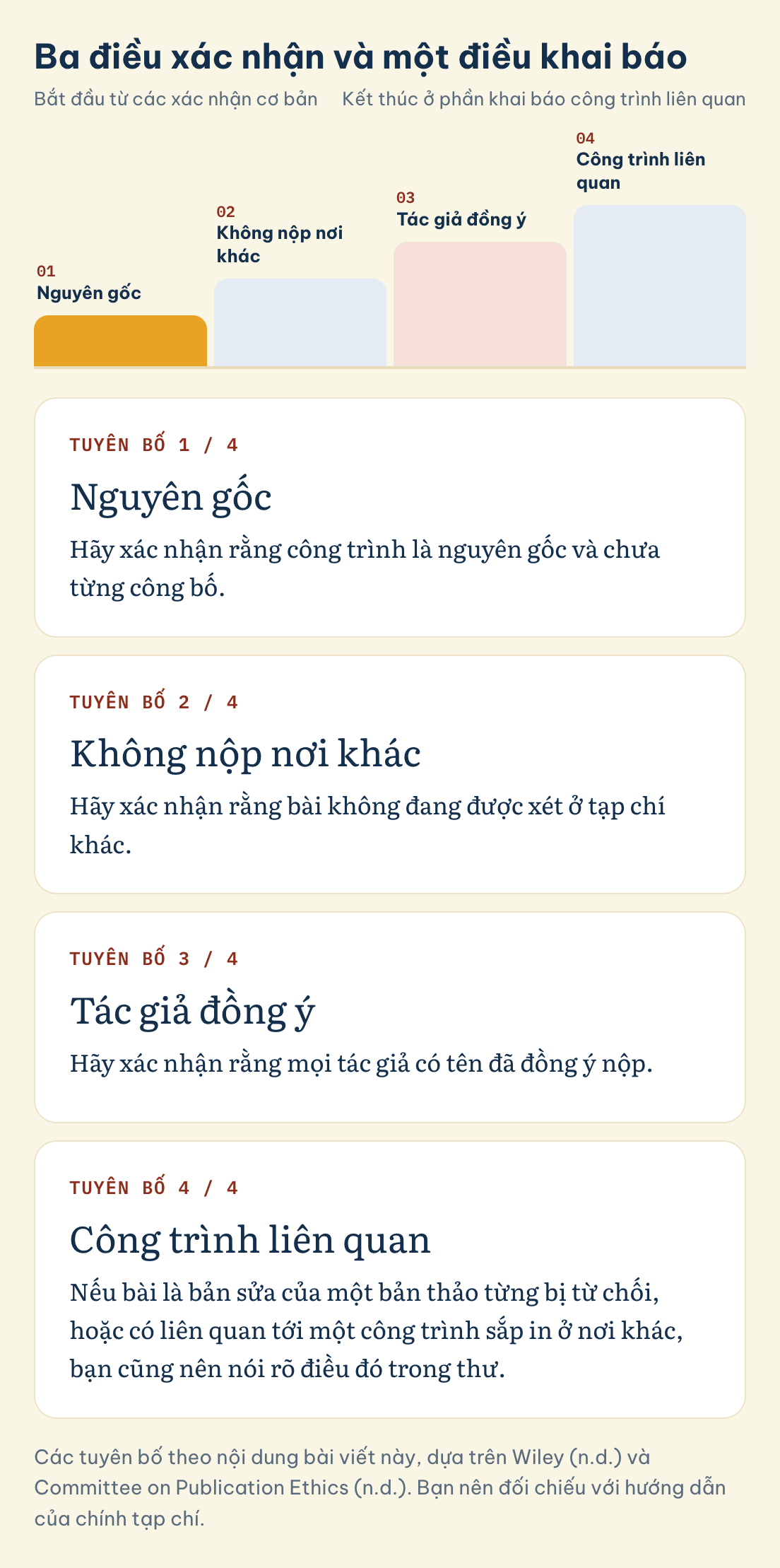
Trả lời trực tiếp: Phần lớn tạp chí muốn lá thư xác nhận ba điều, gồm công trình là nguyên gốc và chưa từng công bố, bài không đang được xét ở tạp chí khác, và mọi tác giả có tên đã đồng ý nộp. Nếu bài là bản sửa của một bản thảo từng bị từ chối, hoặc có liên quan tới một công trình sắp in ở nơi khác, bạn cũng nên nói rõ điều đó trong thư.
Ba điều xác nhận và một điều khai báo
Chạm vào một tuyên bố để xem nó đòi hỏi gì ở bạn.
Tuyên bố 1 / 4
Nguyên gốc
Hãy xác nhận rằng công trình là nguyên gốc và chưa từng công bố.
Tuyên bố 2 / 4
Không nộp nơi khác
Hãy xác nhận rằng bài không đang được xét ở tạp chí khác.
Tuyên bố 3 / 4
Tác giả đồng ý
Hãy xác nhận rằng mọi tác giả có tên đã đồng ý nộp.
Tuyên bố 4 / 4
Công trình liên quan
Nếu bài là bản sửa của một bản thảo từng bị từ chối, hoặc có liên quan tới một công trình sắp in ở nơi khác, bạn cũng nên nói rõ điều đó trong thư.
Lưu hình này
Bằng chứng: Wiley (n.d.), trong hướng dẫn tác giả được xây dựng theo chuẩn của Committee on Publication Ethics (COPE), yêu cầu cover letter khẳng định bản thảo là công trình nguyên gốc, chưa công bố và không đang được xét ở nơi khác, đồng thời khai báo mọi lần nộp trước hay công trình liên quan. Committee on Publication Ethics (n.d.) cũng đặt ra cùng nguyên tắc minh bạch này trong hướng dẫn dành cho tác giả. International Committee of Medical Journal Editors (ICMJE) có một yêu cầu rất gần về quyền tác giả, là mọi tác giả có tên phải thật sự đồng ý với bài nộp đang được khai báo. Những tuyên bố này bảo vệ bạn trước cáo buộc nộp trùng (duplicate submission) về sau.
Ví dụ: Một nhà nghiên cứu người Việt ngành y tế công cộng từng nộp một phiên bản trước của bài cho chính tạp chí đó một năm trước. Cố vấn MAAS khuyên chị nói thẳng điều này trong cover letter và tóm tắt những gì đã thay đổi. Biên tập viên đánh giá cao sự minh bạch, và bản thảo đã sửa được gửi đi phản biện thay vì bị gắn cờ trùng lặp.
◆ Câu hỏi 5 / 7 · Độ dài
Cover letter nên dài bao nhiêu và bố cục thế nào?
Trả lời trực tiếp: Bạn nên giữ lá thư trong 1 trang, thường là ba đến bốn đoạn ngắn. Mở đầu bằng lời chào và một câu nói rõ bạn đang nộp gì, tiếp theo là đoạn tóm tắt kèm đoạn khớp phạm vi, sau đó là các tuyên bố đạo đức, và kết bằng thông tin của tác giả liên hệ. Lá thư ngắn gọn cho thấy bạn tôn trọng thời gian của biên tập viên.
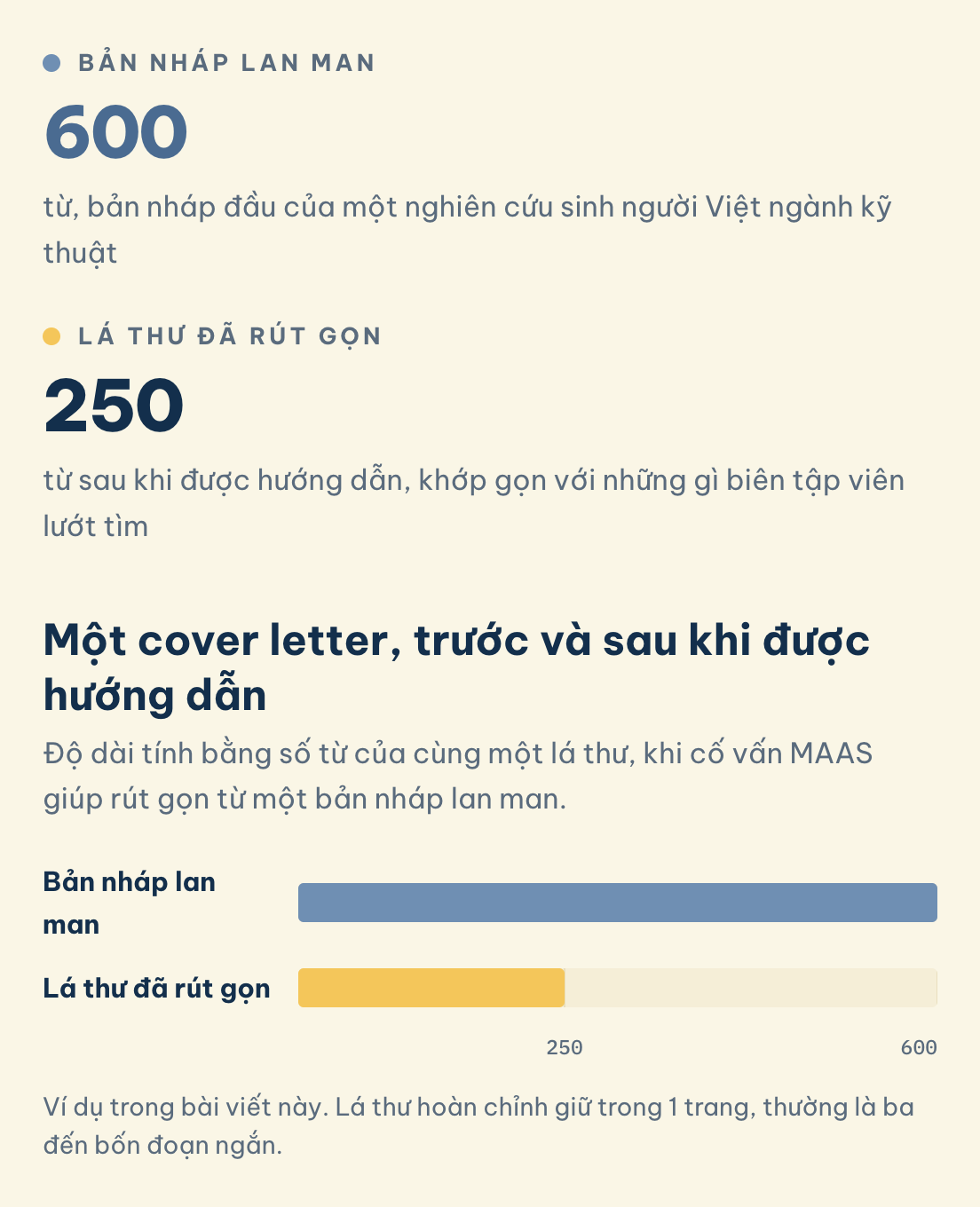
Bản nháp lan man
600
từ, bản nháp đầu của một nghiên cứu sinh người Việt ngành kỹ thuật
Lá thư đã rút gọn
250
từ sau khi được hướng dẫn, khớp gọn với những gì biên tập viên lướt tìm
Một cover letter, trước và sau khi được hướng dẫn
Độ dài tính bằng số từ của cùng một lá thư, khi cố vấn MAAS giúp rút gọn từ một bản nháp lan man.
Lưu hình này
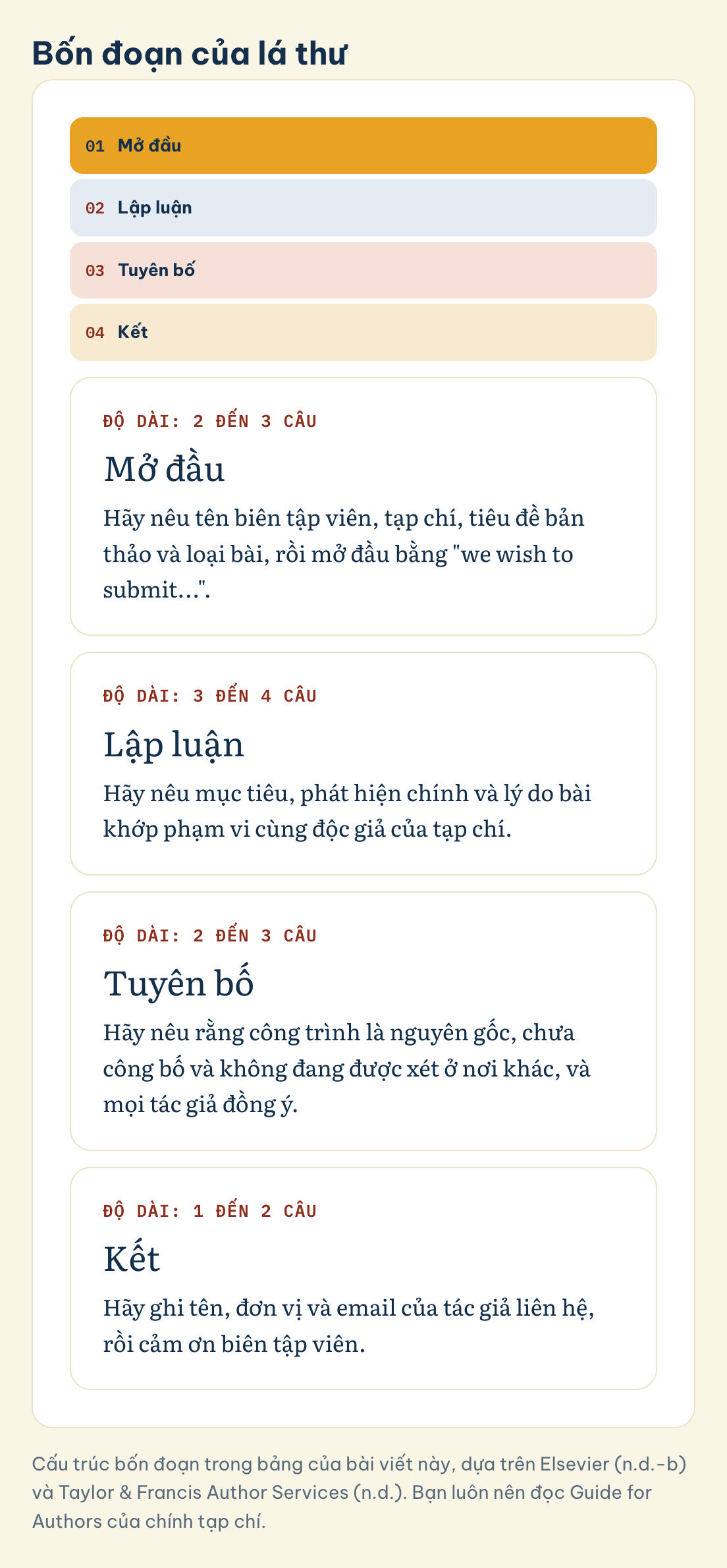
Bốn đoạn của lá thư
Chạm vào một đoạn để xem nó chứa gì.
Độ dài: 2 đến 3 câu
Mở đầu
Hãy nêu tên biên tập viên, tạp chí, tiêu đề bản thảo và loại bài, rồi mở đầu bằng "we wish to submit...".
Độ dài: 3 đến 4 câu
Lập luận
Hãy nêu mục tiêu, phát hiện chính và lý do bài khớp phạm vi cùng độc giả của tạp chí.
Độ dài: 2 đến 3 câu
Tuyên bố
Hãy nêu rằng công trình là nguyên gốc, chưa công bố và không đang được xét ở nơi khác, và mọi tác giả đồng ý.
Độ dài: 1 đến 2 câu
Kết
Hãy ghi tên, đơn vị và email của tác giả liên hệ, rồi cảm ơn biên tập viên.
Lưu hình này
Bằng chứng: Elsevier (n.d.-b) và Taylor & Francis Author Services (n.d.) đều khuyên giữ cover letter ngắn, tập trung và viết riêng cho đúng tạp chí thay vì dùng lại lá thư của lần nộp trước. Hướng dẫn tác giả của Springer Nature và SAGE Publications nói cùng một điều, và chỉ dẫn của Emerald Publishing, MDPI hay BioMed Central (BMC) cũng vậy. Một lá thư mẫu lộ rõ là không viết cho tạp chí đang nhận nó sẽ làm hại bạn.
Ví dụ: Bảng dưới đây là cấu trúc bốn đoạn mà một cố vấn MAAS dùng khi hướng dẫn một nghiên cứu sinh người Việt ngành kỹ thuật rút bản nháp lan man 600 từ xuống một lá thư 250 từ, khớp gọn với những gì biên tập viên lướt tìm.
| Đoạn | Mục đích | Viết gì | Độ dài |
|---|---|---|---|
| 1 | Mở đầu | Tên biên tập viên, tạp chí, tiêu đề bản thảo, loại bài, "we wish to submit..." | 2–3 câu |
| 2 | Lập luận | Mục tiêu, phát hiện chính, và lý do bài khớp phạm vi và độc giả của tạp chí | 3–4 câu |
| 3 | Tuyên bố | Nguyên gốc, chưa công bố, không đang được xét ở nơi khác; mọi tác giả đồng ý | 2–3 câu |
| 4 | Kết | Tên, đơn vị, email của tác giả liên hệ; lời cảm ơn biên tập viên | 1–2 câu |
Nghiên cứu sinh đó nộp lá thư đã rút gọn cho một tạp chí Q2 và nhận quyết định đầu tiên sau chưa đầy 3 tháng.
Mẫu tham khảo bốn đoạn để bạn chỉnh theo tạp chí của mình (không bao giờ dùng nguyên văn):
Dear Dr [Editor surname],
We wish to submit our original research article, "[Manuscript title]," for consideration as a [article type] in [Journal name].
Our study [one-sentence aim] and finds that [one-sentence main result]. This speaks directly to [Journal name]'s recent focus on [theme or a recent paper you cite], and we believe it will interest your readers because [why it matters].
We confirm that this manuscript is original, has not been published elsewhere, and is not under consideration by another journal; all named authors have approved the submission.
Thank you for considering our work. I am the corresponding author and can be reached at [email] ([affiliation]).
Sincerely, [Name]
Bạn cần thay mọi chỗ trong ngoặc vuông bằng chi tiết riêng của tạp chí mình nộp, vì biên tập viên nhận ra ngay một lá thư dùng lại, và một lá thư mẫu chung chung sẽ làm hại bạn.
◆ Câu hỏi 6 / 7 · Lỗi thường gặp
Những lỗi nào khiến cover letter (và cả bài báo) bị từ chối ngay tại bàn?
Trả lời trực tiếp: Những lỗi tai hại nhất là lá thư viết cho một tạp chí khác, phần tóm tắt chép lại abstract, không ghi hoặc ghi sai tên biên tập viên, thiếu tuyên bố đạo đức, và thổi phồng ý nghĩa mà dữ liệu không đỡ nổi. Lỗi nào cũng cho thấy sự cẩu thả, đúng vào lúc biên tập viên đang cân nhắc có nên dành thời gian của người phản biện cho bài hay không.
Bằng chứng: Biên tập viên thường xuyên cho biết dấu hiệu rõ nhất của một ấn tượng đầu xấu là cover letter và abstract nhắm sai đối tượng, và Elsevier (n.d.-b) khuyên tác giả không bao giờ dùng lại lá thư của lần nộp trước mà không cập nhật. Jawaid và Jawaid (2019) ghi nhận rằng phạm vi và mức ý nghĩa nằm trong số những lý do từ chối hàng đầu ở vòng sàng lọc này, trước khi bài được giao cho người phản biện, nên lá thư mang sức nặng thật. Retraction Watch, cơ sở dữ liệu công khai theo dõi các bài bị rút sau khi đăng, là lời nhắc rằng sự cẩu thả ở bất kỳ khâu nộp bài nào cũng tích tụ lại suốt sự nghiệp.
Ví dụ: Một khách hàng người Việt của MAAS suýt nộp một lá thư vẫn còn ghi tên tạp chí chị thử trước đó. Trong lượt rà soát ở giai đoạn cuối, cố vấn phát hiện tên tạp chí và chức danh biên tập viên còn sót lại, sửa phần lời chào và kéo tuyên bố về ý nghĩa của bài xuống đúng mức mà dữ liệu cho phép. Bản nộp đã sửa được gửi đi phản biện.
◆ Câu hỏi 7 / 7 · Giọng văn
Nhà nghiên cứu Việt và người viết tiếng Anh không phải bản ngữ nên xử lý giọng văn thế nào?
Trả lời trực tiếp: Bạn nên nhắm tới thứ tiếng Anh rõ ràng, tự tin và súc tích thay vì câu chữ cầu kỳ. Vài câu ngắn mà đúng ngữ pháp tốt hơn những câu dài có lỗi, vì cover letter cũng là lần đầu biên tập viên đọc tiếng Anh viết của bạn. Trước khi nộp, hãy nhờ một người đọc học thuật viết tiếng Anh thành thạo kiểm tra lại lá thư.
Bằng chứng: Một số tạp chí yêu cầu bằng chứng bản thảo đã được biên tập ngôn ngữ chuyên nghiệp, từ một dịch vụ như American Journal Experts (AJE) hoặc một biên tập viên học thuật có trình độ tương đương. Elsevier (n.d.-a), trong hướng dẫn về các lý do từ chối thường gặp, xếp ngôn ngữ kém vào nhóm nguyên nhân lặp đi lặp lại của ấn tượng đầu tiêu cực. Với nhà nghiên cứu Việt công bố bằng tiếng Anh, một cover letter sạch sẽ đặt tông cho cách biên tập viên đọc cả bản thảo.
Ví dụ: Một cố vấn công bố của MAAS, khi rà soát lá thư của một nghiên cứu sinh người Việt, phát hiện bốn câu dài hơn 40 từ, câu nào cũng sai thì của động từ. Làm việc cùng chị theo từng giai đoạn, cố vấn giúp chị viết lại thành tám câu ngắn và đúng ngữ pháp. Lá thư đọc lên trôi chảy và chuyên nghiệp, và bài báo được gửi đi phản biện ở một tạp chí Q1.
Câu hỏi thường gặp
Tôi có cần cover letter không nếu hệ thống nộp bài đã có ô ghi chú?
Thường là có. Nhiều tạp chí yêu cầu cover letter như một tệp tải lên riêng, và ngay cả khi không bắt buộc, đó vẫn là cơ hội miễn phí để bạn trình bày lập luận với biên tập viên. Bạn luôn nên đọc Guide for Authors của tạp chí trước.
Làm sao biết một tạp chí là thật trước khi viết thư?
Bạn đối chiếu tạp chí với Directory of Open Access Journals (DOAJ), Cabells Predatory Reports và thứ hạng quartile của nó trên Journal Citation Reports, SCImago Journal Rank (SJR) hoặc PubMed Central (PMC). Một cover letter gửi tới tạp chí săn mồi hay tạp chí không được lập chỉ mục, hoặc được chọn chỉ nhờ một lần tìm trên Google Scholar, thì công viết thư đều bỏ phí.
Tôi có nên gửi thư cho một biên tập viên cụ thể không?
Có, khi bạn xác định được đúng biên tập viên hoặc handling editor, tức biên tập viên phụ trách mảng chuyên môn của bài. Nếu không xác định được, lời chào chung "Dear Editors" vẫn chấp nhận được, nhưng đừng bao giờ để trống lời chào hay ghi sai tên.
Tôi có thể dùng một cover letter cho nhiều tạp chí không?
Không. Biên tập viên nhận ra khi một lá thư được viết cho tạp chí khác, và dùng lại mà không cập nhật phạm vi cùng thông tin biên tập viên là lý do hay gặp của một ấn tượng đầu yếu. Bạn nên viết riêng cho từng tạp chí.
Tôi có nên gợi ý người phản biện trong cover letter không?
Chỉ khi tạp chí yêu cầu điều đó trong thư. Phần lớn tạp chí thu danh sách người phản biện được đề xuất hoặc cần tránh qua biểu mẫu nộp bài chứ không qua cover letter, nên bạn hãy đọc hướng dẫn trước khi thêm vào.
Đoạn nào trong thư quan trọng nhất?
Đó là đoạn khớp phạm vi. Theo cách nhìn của Jawaid và Jawaid (2019), đây là tín hiệu mạnh nhất mà một cover letter có thể gửi tới vòng sàng lọc biên tập, vì khi cho biên tập viên thấy bài của bạn khớp trọng tâm và các trao đổi gần đây của tạp chí, bạn trả lời thẳng vào bộ lọc đầu tiên họ áp dụng.
Nên đặt cover letter trong thân email hay gửi thành tệp đính kèm?
Bạn làm theo Guide for Authors của tạp chí. Phần lớn hệ thống nộp bài yêu cầu tải lá thư lên thành một tệp riêng hoặc dán vào một ô dành riêng, không để chung trong tệp bản thảo. Nếu nộp qua email, bạn đặt lá thư trong thân email và đính kèm bản thảo. Dù theo cách nào, nội dung lá thư cũng phải giống hệt bản mà hệ thống ghi nhận.
Cover letter khác abstract của bản thảo ở chỗ nào?
Abstract tóm tắt nội dung khoa học cho người đọc, còn cover letter lập luận với một biên tập viên vì sao bài này thuộc về tạp chí này vào lúc này. Đừng bao giờ dán abstract vào thư, vì biên tập viên sẽ hiểu rằng bạn không có gì riêng để nói về tạp chí của họ, và bạn bỏ phí đúng đoạn có ảnh hưởng lớn nhất tới quyết định sàng lọc.
MAAS có thể giúp tôi viết cover letter gửi biên tập viên không?
Có. Cố vấn Công bố của MAAS đồng hành cùng nhà nghiên cứu Việt qua phần cover letter song song với việc chọn tạp chí và nộp bài, gồm định khung phạm vi, tuyên bố đạo đức và trau chuốt ngôn ngữ, theo từng giai đoạn. Bạn có thể đặt lịch tư vấn qua trang liên hệ.
Sẵn sàng nộp bài với một lá thư mở được cánh cửa?
Một cover letter sắc bén là cách rẻ nhất để cải thiện một bản nộp, và viết nó dễ hơn nhiều khi bạn có một cố vấn mà chính bài của họ từng đi qua vòng sàng lọc biên tập. Cố vấn Công bố của MAAS làm phần cover letter ở giai đoạn cuối, song song với danh sách tạp chí rút gọn và các bước nộp bài, và giúp bạn dựng lá thư quanh đóng góp mà nghiên cứu của bạn mang lại. Mỗi cố vấn có nhiều bài Q1 hoặc Q2 đứng tên chính mình, và 23% chuyên gia của MAAS có học vị Tiến sĩ. MAAS ghép cố vấn cho bạn trong vòng 48 giờ khi mạng lưới đã có người phù hợp với ngành. Nếu chưa có, MAAS mở một đợt tuyển riêng cho hồ sơ của bạn, và việc này thường mất khoảng hai tuần. Bạn có thể bắt đầu bằng buổi tư vấn miễn phí 20 phút. MAAS đồng hành, còn bạn vẫn là tác giả ở mọi bước.
Đặt lịch tư vấn Cố vấn Công bố cùng MAAS →
Cẩm nang liên quan
- Nộp bài báo lên tạp chí khoa học bằng cách nào?: vị trí của cover letter trong toàn bộ quy trình nộp bài
- Làm sao chọn đúng tạp chí Scopus cho bài báo của bạn?: phần việc về phạm vi và mức phù hợp mà cover letter sau đó phải truyền đạt
- Trả lời nhận xét của người phản biện cho bài nộp tạp chí Scopus thế nào?: lá thư tiếp theo bạn sẽ viết sau khi biên tập viên gửi bài đi phản biện
- Một nhà nghiên cứu Việt được công bố trên tạp chí Scopus Q1 hay Q2 bằng cách nào?: toàn bộ hành trình công bố mà lá thư này nằm trong đó
- Dịch vụ Cố vấn Công bố: các mức dịch vụ đầy đủ cho hỗ trợ Scopus Q1/Q2
- Trung tâm tài nguyên Công bố Scopus: mẫu cover letter và checklist nộp bài
References
- Creswell, J. W., & Creswell, J. D. (2018). Research design: Qualitative, quantitative, and mixed methods approaches (5th ed.). SAGE Publications.
- Committee on Publication Ethics. (n.d.). Guidance for authors. Retrieved June 8, 2026, from https://publicationethics.org/guidance
- Elsevier. (n.d.-a). Common reasons for paper rejection. Retrieved June 8, 2026, from https://scientific-publishing.webshop.elsevier.com/publication-process/paper-rejection-common-reasons/
- Elsevier. (n.d.-b). How to write a cover letter for your manuscript. Retrieved June 8, 2026, from https://scientific-publishing.webshop.elsevier.com/publication-process/how-to-write-a-cover-letter-for-a-manuscript/
- Elsevier. (n.d.-c). What should be included in a cover letter? Retrieved June 8, 2026, from https://www.elsevier.support/publishing/answer/what-should-be-included-in-a-cover-letter
- Jawaid, S. A., & Jawaid, M. (2019). Common reasons for not accepting manuscripts for further processing after editor's triage and initial screening. Pakistan Journal of Medical Sciences, 35(1), 1–3. https://doi.org/10.12669/pjms.35.1.28
- Taylor & Francis Author Services. (n.d.). Writing a journal article cover letter. Retrieved June 8, 2026, from https://authorservices.taylorandfrancis.com/publishing-your-research/making-your-submission/writing-a-journal-article-cover-letter/
- Wiley. (n.d.). Author guidelines. Retrieved June 8, 2026, from https://onlinelibrary.wiley.com/page/journal/16136829/homepage/author-guidelines
Bài viết này thuộc chuỗi MAAS Journal dành cho học viên sau đại học và nhà nghiên cứu người Việt. Cố vấn Công bố của MAAS là một đối tác cố vấn: MAAS đồng hành cùng tác giả theo từng giai đoạn, với phản hồi phát triển từ các cố vấn trình độ sau đại học đã công bố trên Scopus. MAAS không viết, không nộp bài và không bảo đảm bài được chấp nhận thay cho tác giả.
Một buổi tư vấn miễn phí 20 phút với cố vấn công bố của MAAS, để cùng trao đổi về bản thảo và tạp chí bạn nhắm tới.
Đặt buổi tư vấn miễn phí ▸